

Hotel Insurance Online :: News
SHARE

Share this news item!

Lithium Battery Fire Risk Puts Boat Cover Under the Spotlight

Why onboard charging habits, storage and policy details now deserve closer attention

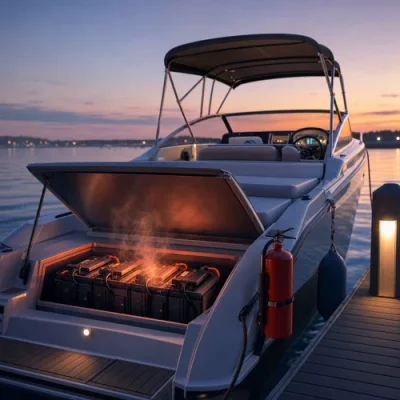
Lithium Battery Fire Risk Puts Boat Cover Under the Spotlight?w=400

The information on this website is general in nature and does not take into account your objectives, financial situation, or needs. Consider seeking personal advice from a licensed adviser before acting on any information.

Fresh marine safety attention on lithium-ion battery fires is a timely warning for Australian boat owners, particularly as more vessels carry rechargeable equipment.
From electric tenders and fishing electronics to portable fridges, power tools, e-foils, scooters and camera gear, modern boating increasingly depends on compact batteries that can store a lot of energy in a small space.

The risk is not that every lithium battery is unsafe. The concern is what can happen when batteries are damaged, poorly charged, exposed to heat, stored near fuel or left unattended in confined spaces. A thermal runaway event can escalate quickly, creating intense heat, toxic smoke and difficult-to-control fire conditions. On a boat, where escape routes may be limited and firefighting resources are constrained, that risk carries both safety and insurance implications.

For boat insurance customers, the practical lesson is to treat battery management as part of vessel risk management. Insurers may look closely at maintenance, safe storage, modifications and whether equipment was used in line with manufacturer instructions when assessing a fire-related claim. If a battery system has been retrofitted, hardwired, upgraded or used to support significant onboard loads, owners should check whether that change affects disclosure obligations, electrical compliance or the insured value of the vessel and accessories.

This is especially relevant for owners of cruisers, yachts, fishing boats and personal watercraft support vessels that now carry multiple devices. It is also important for small commercial operators, including charter and fishing tour businesses, where passenger safety, business interruption and liability exposures can add complexity beyond damage to the hull itself.

Key precautions include:

  • using chargers supplied or recommended by the manufacturer;
  • charging batteries in a ventilated area away from fuel, soft furnishings and escape paths;
  • checking for swelling, corrosion, water ingress or impact damage;
  • avoiding unattended overnight charging where possible;
  • keeping batteries out of extreme heat and direct sun when stored;
  • recording major electrical upgrades and retaining invoices or installation details.

The insurance angle is not limited to fire damage. Battery-related incidents can involve salvage, clean-up, marina damage, third-party property loss and personal injury. That makes it important to read the policy wording, including exclusions for wear and tear, gradual deterioration, unapproved modifications and unattended operation.

Owners should also revisit their accessories and equipment values. Rechargeable marine gear can be expensive, and recent upgrades may not be reflected in an old schedule. Before renewal, it may be useful to estimate an appropriate sum insured so the hull, motors, trailer, electronics and onboard equipment are not understated.

Battery technology is here to stay, but safer habits and clearer insurance records can reduce the chance of a preventable loss turning into a disputed claim.

Published:Wednesday, 12th Aug 2026
Author: Paige Estritori

Please Note: We do not endorse any specific products or companies. Some content is sourced from third parties, including press releases, and may not be independently verified for accuracy or completeness.

Share this news item:

Rate this article

0 Comments

No comments yet. Be the first to share your thoughts.

Insurance News

Why Cyber Risk Belongs in Every Restaurant Insurance Review
26 Aug 2026: Paige Estritori
Fresh attention on cyber incidents across Australian businesses is a timely warning for restaurants, cafés and takeaway operators. Hospitality venues may not always see themselves as data-heavy businesses, but modern food service increasingly depends on connected systems: point-of-sale terminals, booking platforms, delivery apps, QR ordering, loyalty databases, rostering tools and cloud accounting. - read more
Why Fatigue Management Is Again a Truck Insurance Issue
26 Aug 2026: Paige Estritori
Recent heavy vehicle compliance activity has again put fatigue management near the top of the risk agenda for Australian transport operators. While enforcement is usually framed as a road safety issue, it also has a direct insurance dimension. Insurers assessing truck insurance risk increasingly look beyond the vehicle itself and ask how well the business controls driver behaviour, scheduling pressure, maintenance downtime and record-keeping. - read more
Why Fresh Insurance Market Data Matters at Renewal Time
26 Aug 2026: Paige Estritori
APRA’s latest general insurance data has again highlighted a point many Australian tradies are already feeling at renewal time: a healthier insurance sector does not necessarily translate into simple or immediate premium relief for small businesses. While insurers continue to operate with stronger capital buffers and improved underwriting discipline, the costs sitting behind many policies remain under pressure. - read more
What Claims Complaint Trends Mean for Salon Insurance
26 Aug 2026: Paige Estritori
Fresh complaints reporting from the Australian Financial Complaints Authority has put insurance service standards back under the microscope, with claim delays, communication issues and disputed outcomes continuing to feature in the wider financial services complaints landscape. For beauty salon owners, skin clinics, nail technicians and mobile beauticians, the lesson is practical: the moment a loss occurs is not the best time to discover that records are incomplete, policy wording is unclear or a treatment has not been properly disclosed. - read more
What NSW Insurance Levy Reform Could Mean for Trade Businesses
26 Aug 2026: Paige Estritori
New South Wales insurance buyers may be heading for an important change as reform of the Emergency Services Levy continues to attract attention across the insurance sector. The levy has long been added to many insurance premiums in NSW to help fund emergency services, and insurers have argued that this approach makes cover more expensive for households and businesses that choose to insure. - read more


Hotel Insurance Articles

A Cybersecurity Guide for Hotel Operators
With an ever-expanding digital landscape, the importance of robust cybersecurity measures in the hospitality industry cannot be overstated. As technology continues to evolve, so too do the threats that target the vulnerabilities within hotel systems. This has made cybersecurity a top priority for hotel operators. - read more
Claims Made Simple: What to Expect When Filing Hotel Insurance Claims
Running a hotel is a complex operation that involves many moving parts. From welcoming guests to maintaining the property, there's a lot to manage. One critical aspect that often flies under the radar is hotel insurance. This form of insurance plays a crucial role in safeguarding your business from unforeseen events that could disrupt operations or impact your financial health. Whether it's damage from natural disasters or unexpected liabilities, insurance is your safety net. - read more
Hotel Contents and Stock Insurance: Key Concepts for Operators
Hotel contents and stock insurance can help protect the physical assets a hotel relies on each day, from furniture and equipment to food, alcohol and other stock. This guide explains what operators should consider when setting cover limits, documenting assets and reviewing exclusions. - read more
The Importance of Risk Assessment in Tailoring Your Hotel’s Insurance Coverage
Risk assessment is a fundamental process in evaluating potential exposure to financial losses and liabilities in the hospitality industry. It involves identifying, analyzing, and evaluating risks that could impact hotel operations. By understanding these risks, hotel operators can tailor their insurance policies to provide comprehensive coverage and mitigate potential payouts. - read more
Disability Income Protection: What Every Hotel Operator Needs to Know
Running a café is a rewarding yet challenging endeavor. With the hospitality industry being fast-paced and ever-changing, café owners often face unique financial challenges. Operating in an industry that is both physically demanding and unpredictable can sometimes lead to unforeseen circumstances that affect the stability and success of your business. - read more

Knowledgebase
Insurance Deductible:
the amount that an insured is required to contribute toward an insurance claim as stipulated in an insurance policy. Otherwise known as the "policy excess".