

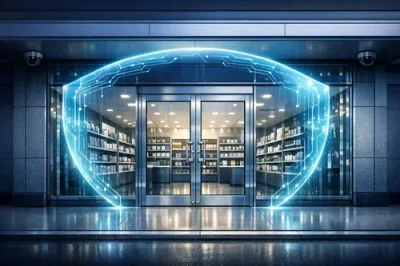
Retail Crime Pressures Are a Reminder to Check Your Shop Cover
Why theft, stock loss and business interruption deserve closer attention
0
The information on this website is general in nature and does not take into account your objectives, financial situation, or needs. Consider seeking personal advice from a licensed adviser before acting on any information.
Fresh industry discussion around retail crime is a timely reminder that shop insurance is not only about large-scale disasters.
For many Australian retailers, the more immediate risks are break-ins, shoplifting, vandalism, smashed glass, damaged fixtures and the trading disruption that follows.
These incidents may be smaller than a flood or fire, but repeated losses can still put pressure on cash flow and margins.
For shop owners, the practical issue is whether current cover reflects the way the business actually operates today. A boutique with high-value stock, a convenience store trading late at night, a bottle shop, a mobile phone retailer and an online store with stock held in a warehouse can all have very different theft and security exposures. Insurers may look closely at location, opening hours, alarms, CCTV, locks, safes, cash handling procedures and previous claims history when assessing risk.
The key cover areas to review include burglary or theft, contents, stock, glass, money, electronic equipment and business interruption. It is also worth checking sub-limits, excesses and exclusions. Some policies may treat theft from unattended premises, stock in transit, employee dishonesty, or losses without forced entry differently. If stock values rise seasonally, a policy limit that looked adequate in a quiet month may fall short during peak trading.
This is where good record-keeping becomes more than an administrative task. Up-to-date stock records, purchase invoices, photos of fit-out and equipment, alarm maintenance logs and incident reports can all help support a claim. Retailers should also estimate current stock and fit-out values rather than relying on old renewal figures or accounting book values.
Risk prevention can also influence the quality of an insurance application. Practical steps may include:
reviewing locks, shutters, lighting and monitored alarm systems;
limiting cash kept on premises after hours;
training staff on safe procedures for suspicious behaviour;
keeping high-value items in secured displays or restricted areas;
checking whether delivery and transit arrangements are insured.
Retail crime is not a reason to panic, but it is a reason to be precise. If your premises, stock profile or trading hours have changed, your insurance should be reviewed before the next incident, not after it. Retailers who are unsure how theft-related sections interact with property, glass and interruption cover may benefit from professional assistance when comparing policy wording and limits.
Please Note: We do not endorse any specific products or companies. Some content is sourced from third parties, including press releases, and may not be independently verified for accuracy or completeness.
Fresh attention on cyber incidents across Australian businesses is a timely warning for restaurants, cafés and takeaway operators. Hospitality venues may not always see themselves as data-heavy businesses, but modern food service increasingly depends on connected systems: point-of-sale terminals, booking platforms, delivery apps, QR ordering, loyalty databases, rostering tools and cloud accounting. - read more
Recent heavy vehicle compliance activity has again put fatigue management near the top of the risk agenda for Australian transport operators. While enforcement is usually framed as a road safety issue, it also has a direct insurance dimension. Insurers assessing truck insurance risk increasingly look beyond the vehicle itself and ask how well the business controls driver behaviour, scheduling pressure, maintenance downtime and record-keeping. - read more
APRA’s latest general insurance data has again highlighted a point many Australian tradies are already feeling at renewal time: a healthier insurance sector does not necessarily translate into simple or immediate premium relief for small businesses. While insurers continue to operate with stronger capital buffers and improved underwriting discipline, the costs sitting behind many policies remain under pressure. - read more
Fresh complaints reporting from the Australian Financial Complaints Authority has put insurance service standards back under the microscope, with claim delays, communication issues and disputed outcomes continuing to feature in the wider financial services complaints landscape. For beauty salon owners, skin clinics, nail technicians and mobile beauticians, the lesson is practical: the moment a loss occurs is not the best time to discover that records are incomplete, policy wording is unclear or a treatment has not been properly disclosed. - read more
New South Wales insurance buyers may be heading for an important change as reform of the Emergency Services Levy continues to attract attention across the insurance sector. The levy has long been added to many insurance premiums in NSW to help fund emergency services, and insurers have argued that this approach makes cover more expensive for households and businesses that choose to insure. - read more
Operating a hotel is not just about offering great services and hospitality. It also involves understanding and managing various types of liability risks. Liability in the hospitality industry can arise from numerous situations, and being unaware of these can potentially expose hotel operators to significant legal issues and financial losses. - read more
Risk assessment is a fundamental process in evaluating potential exposure to financial losses and liabilities in the hospitality industry. It involves identifying, analyzing, and evaluating risks that could impact hotel operations. By understanding these risks, hotel operators can tailor their insurance policies to provide comprehensive coverage and mitigate potential payouts. - read more
Public liability insurance can help hotel operators manage legal liability risks involving guests, visitors, contractors and other third parties. This guide explains how it generally applies, what incidents may be relevant, and what policy limits, exclusions and documentation issues to review. - read more
The hospitality industry in Australia is a dynamic and ever-evolving sector, characterised by a diverse range of services and offerings. Hotels operate in a vibrant environment, catering to both local and international guests while constantly adapting to seasonal changes, economic shifts, and emerging trends. This dynamic nature introduces a variety of unique risks that need to be managed effectively. - read more
Knowledgebase
Subrogation: An insurance carrier may reserve the "right of subrogation" in the event of a loss. This means that the company may choose to take action to recover the amount of a claim paid to a covered insured if the loss was caused by a third party.
No comments yet. Be the first to share your thoughts.